Updated August 2026

5 Best Portable Jump Starters

The five portable jump starters we believe are worth considering after comparing specifications, features, independent testing and overall value.

A jump starter is bought once and judged in a single moment — the morning it either works or it doesn't. We compared published specifications, documented safety systems, independent test reports and owner-reported behaviour in cold conditions, then scored each unit against the criteria that decide whether it earns space in your vehicle.

Top 5 at a glance

Every score below is the sum of category-specific criteria, weighted for what actually matters in portable jump starters.

The five, ranked

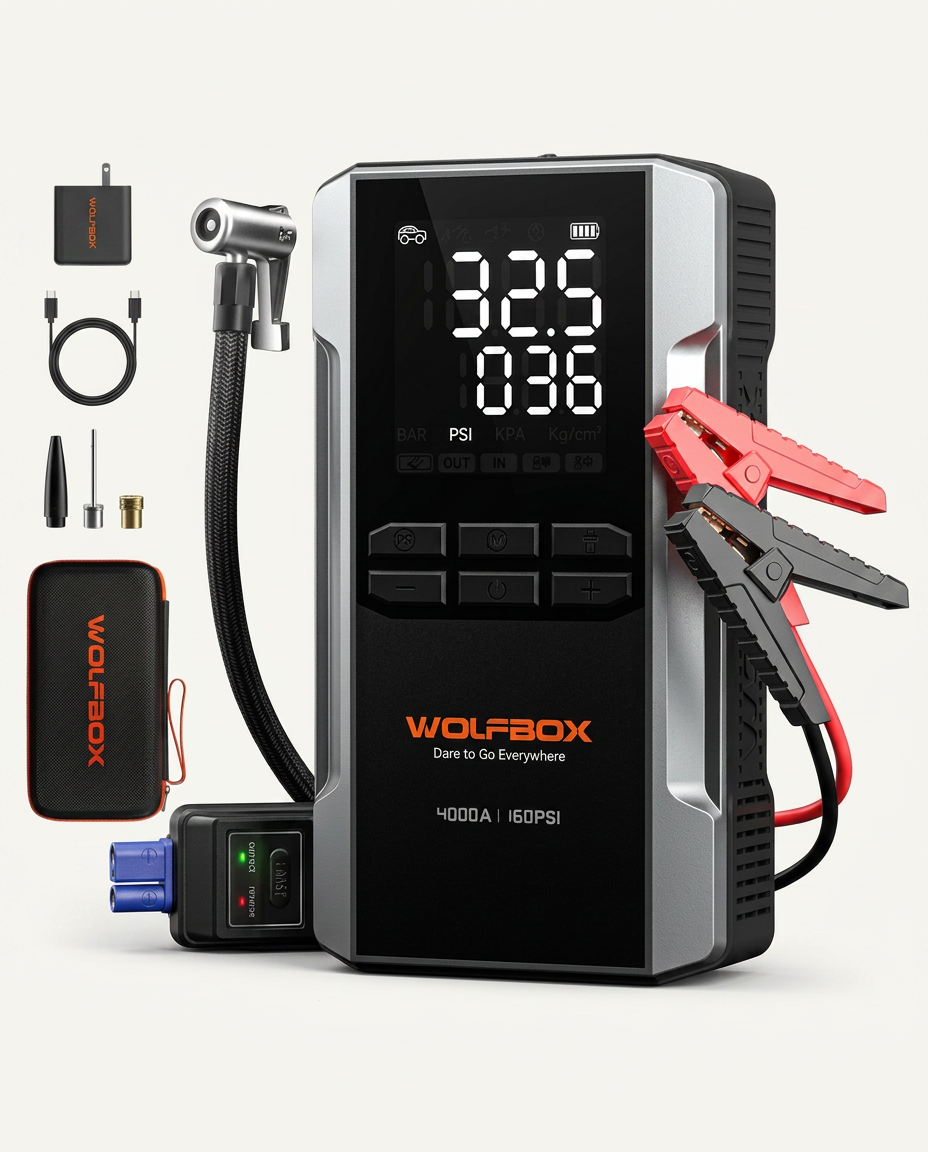
WOLFBOX WOLFBOX MegaVolt24Best Overall

#1 · WOLFBOX

WOLFBOX MegaVolt24

The strongest overall combination of starting capability, usable battery reserve, versatility and value in our comparison.

Why It Ranked Here

The MegaVolt24 sits at the top because it does not force a trade-off. It carries enough reserve to survive repeated attempts on a cold morning, supports both 12V and 24V systems, and pairs that with fast USB-C recharging and a clear display. The GOOLOO GT6000 matches it for raw output, but the WOLFBOX gives up less in usability and documentation, and its safety and feedback systems are more clearly specified. It loses points only against the very best compact units on portability.

What We Like

  • Large usable energy reserve supports repeated starting attempts
  • 12V and 24V support covers vans, trucks and light commercial engines
  • Fast USB-C recharge keeps the pack realistically ready
  • Clear display reports state of charge and fault conditions
  • Doubles as a capable power bank without compromising its main job

What Could Be Better

  • Noticeably larger and heavier than glovebox-class units
  • Brand has a shorter service history than NOCO in this category
  • Case bulk makes permanent cabin storage awkward in small cars

Best For

Owners who want one unit that covers every vehicle in the driveway without thinking about it again.

Collective Score

94 / 100
Starting Performance29 / 30
Energy Reserve & Charging19 / 20
Safety & Durability18 / 20
Ease of Use & Portability14 / 15
Value14 / 15
Total94 / 100
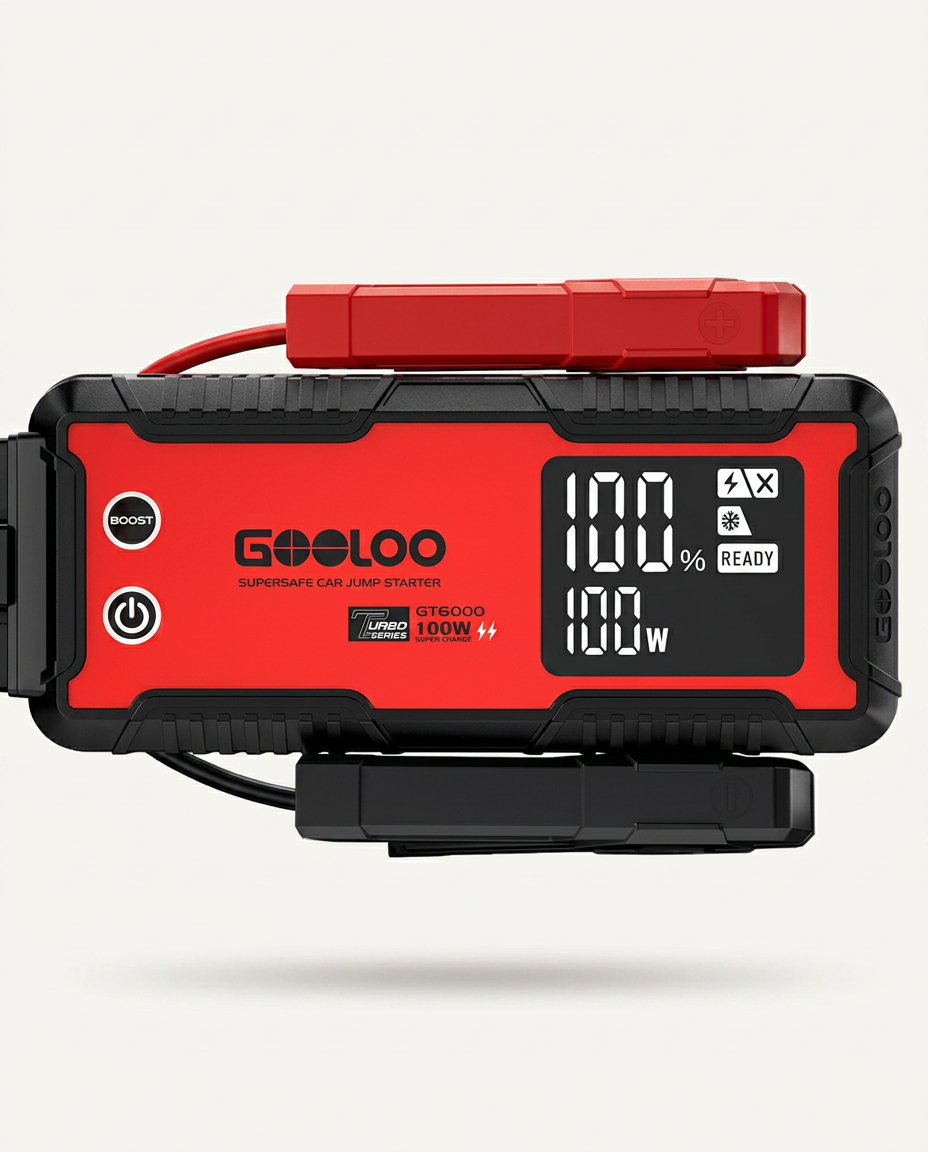
GOOLOO GOOLOO GT6000Best for Maximum Power & Large Engines

#2 · GOOLOO

GOOLOO GT6000

The most output-focused pack here — built for large diesels and vehicles that crank hard and long.

Why It Ranked Here

On raw starting capability the GT6000 is the equal of our winner, and for a large diesel it may be the better buy. It ranks second because the supporting details are slightly weaker: the safety documentation is less explicit than the WOLFBOX and NOCO units, and the size and clamp bulk make it a boot-stored tool rather than an everyday companion.

What We Like

  • Very high rated output suited to large petrol and diesel engines
  • Large capacity supports many attempts before recharging
  • Heavy-duty clamps and cabling
  • Strong value for the output level

What Could Be Better

  • Bulky and heavy; not a glovebox unit
  • Protection systems less thoroughly documented than rivals
  • Recharge time is longer than the USB-C PD leaders

Best For

Trucks, vans and diesel engines where cranking load is the deciding factor.

Collective Score

92 / 100
Starting Performance29 / 30
Energy Reserve & Charging19 / 20
Safety & Durability17 / 20
Ease of Use & Portability13 / 15
Value14 / 15
Total92 / 100
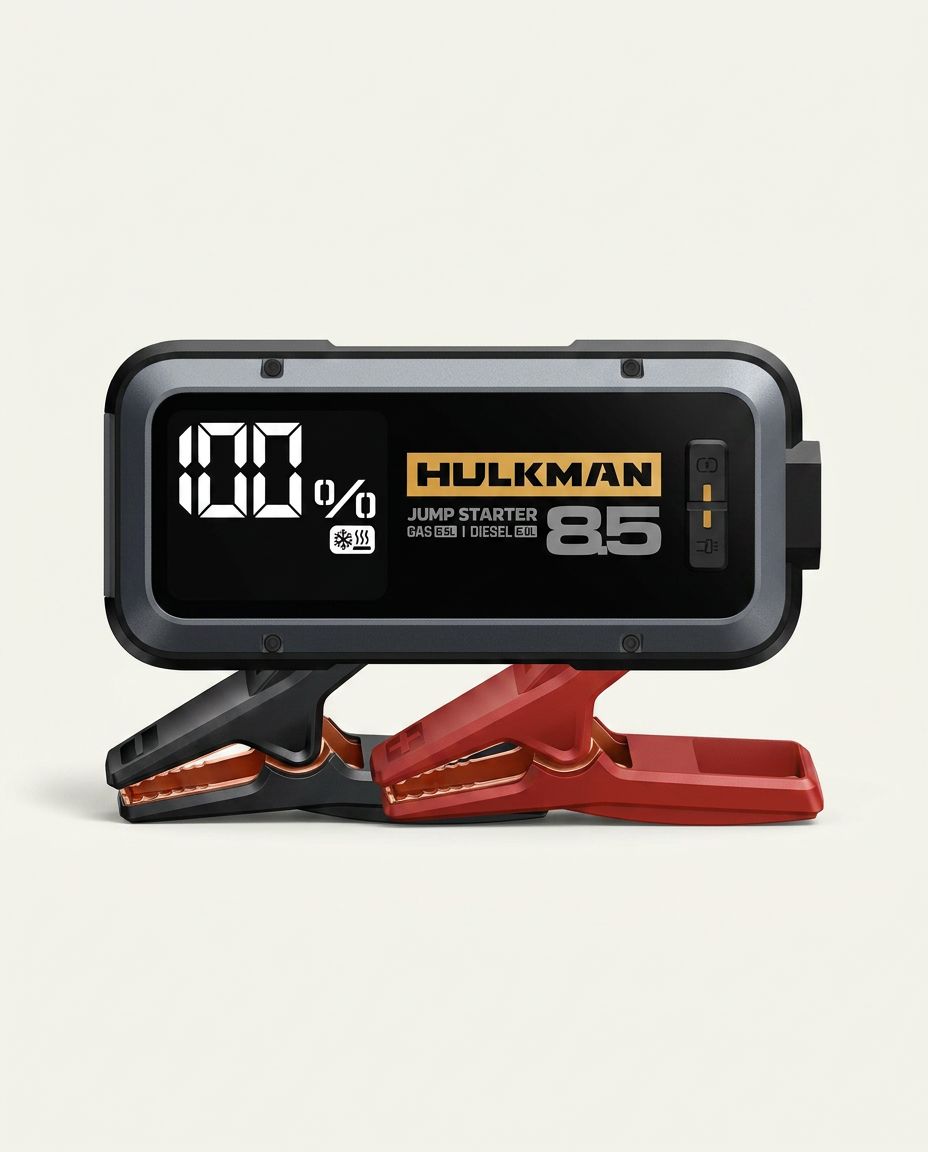
HULKMAN HULKMAN Alpha85SBest for Cold Weather

#3 · HULKMAN

HULKMAN Alpha85S

A well-built mid-size pack whose battery pre-heating function addresses the exact conditions that defeat lithium packs.

Why It Ranked Here

Lithium chemistry loses output in the cold, and the Alpha85S is one of the few units that treats that as a design problem rather than a footnote. Its pre-heating function, excellent build and generous display earn it third. It sits below the top two because its raw capability is a step down and its price relative to that capability is the weakest in the ranking.

What We Like

  • Battery pre-heating addresses cold-weather output loss directly
  • Excellent build quality and clamp design
  • Large, informative display
  • Comfortable size for regular vehicle storage

What Could Be Better

  • Costs more than higher-output competitors
  • Pre-heating consumes reserve before the first attempt
  • Overkill for buyers in mild climates

Best For

Drivers in genuinely cold climates where sub-freezing starts are routine.

Collective Score

90 / 100
Starting Performance27 / 30
Energy Reserve & Charging17 / 20
Safety & Durability20 / 20
Ease of Use & Portability15 / 15
Value11 / 15
Total90 / 100
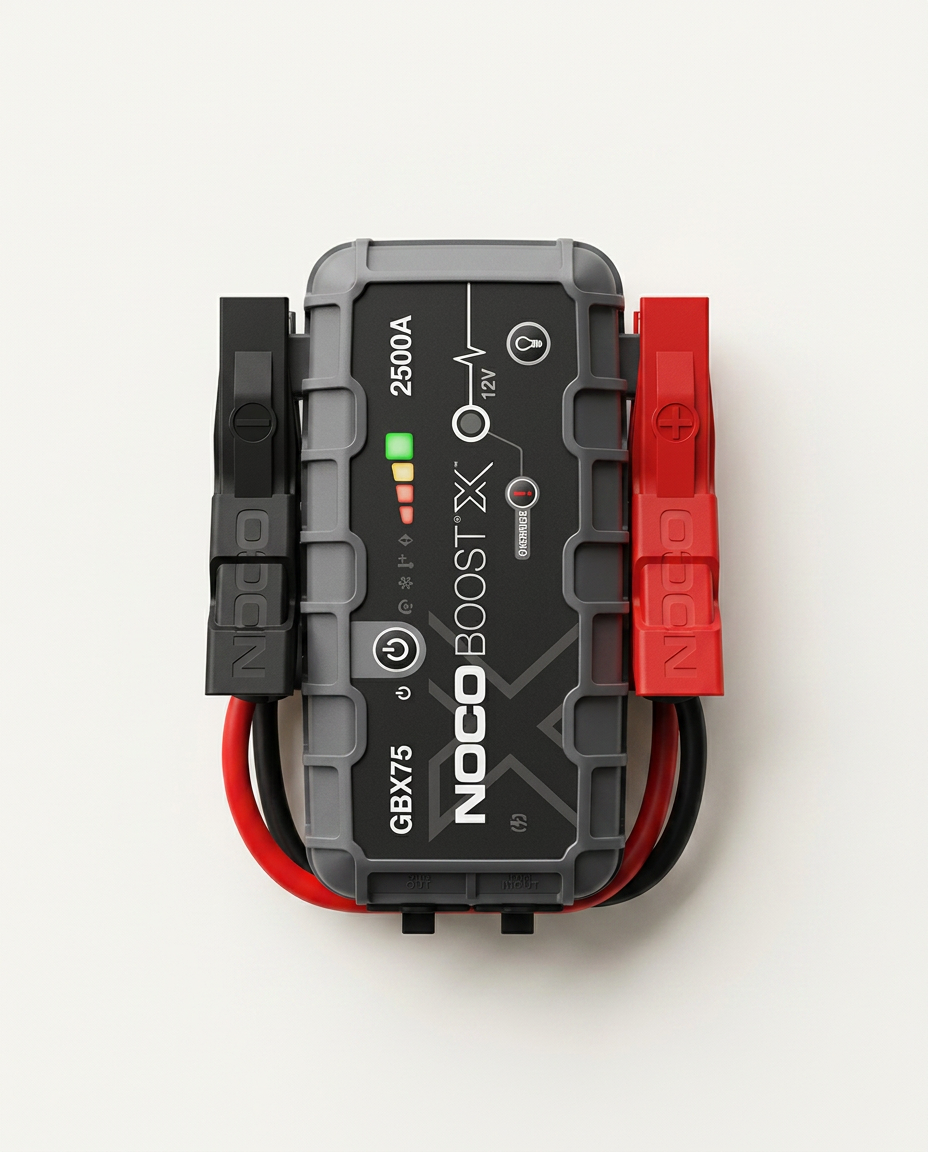
NOCO NOCO Boost X GBX75Best Premium Compact Choice

#4 · NOCO

NOCO Boost X GBX75

The most refined compact pack here: 2500A of output, fast USB-C recharging and exemplary safety design in a glovebox footprint.

Why It Ranked Here

The GBX75 is the unit we would keep in a car permanently. NOCO's safety engineering and support record are the strongest in the category, and USB-C Power Delivery recharging removes the main weakness of compact packs. It ranks fourth only because its reserve cannot match the larger units above it — a deliberate trade, not a flaw.

What We Like

  • 2500A peak output from a compact body
  • Excellent safety design and manufacturer support history
  • Fast USB-C Power Delivery recharging
  • Refined build and clear indicator feedback

What Could Be Better

  • Limited reserve compared with larger packs
  • Premium price for the capacity offered
  • Not the right choice for the largest diesels

Best For

Buyers who want a compact, dependable pack that lives in the vehicle year-round.

Collective Score

87 / 100
Starting Performance25 / 30
Energy Reserve & Charging14 / 20
Safety & Durability20 / 20
Ease of Use & Portability15 / 15
Value13 / 15
Total87 / 100
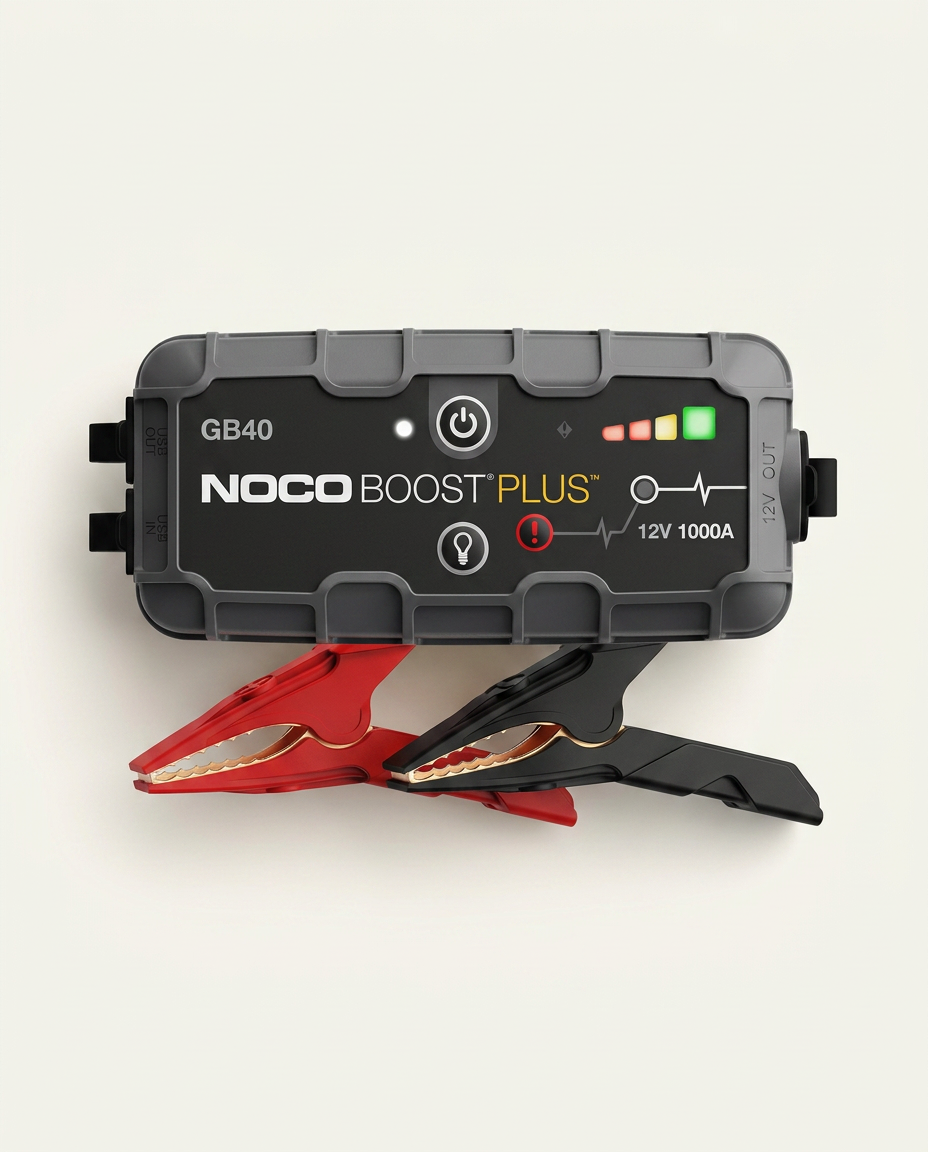
NOCO NOCO Boost Plus GB40Best for Everyday Cars

#5 · NOCO

NOCO Boost Plus GB40

The long-standing default for ordinary cars — proven, simple and inexpensive enough to buy before you need it.

Why It Ranked Here

The GB40 has been the reference compact jump starter for years, and nothing here beats it on price-to-dependability for a commuter car. It ranks fifth because its reserve is the smallest in the group and it still recharges over micro-USB, which is a real disadvantage in 2026 — but for a four-cylinder car kept in a mild climate, it remains an easy recommendation.

What We Like

  • Best value in the ranking for ordinary vehicles
  • Long, well-documented reliability record
  • Simple enough for any driver to use correctly
  • Very compact and light

What Could Be Better

  • Smallest energy reserve here; few attempts per charge
  • Slow recharging over micro-USB
  • Not suitable for large petrol or diesel engines

Best For

Everyday commuter cars and small SUVs in moderate climates.

Collective Score

84 / 100
Starting Performance23 / 30
Energy Reserve & Charging11 / 20
Safety & Durability20 / 20
Ease of Use & Portability15 / 15
Value15 / 15
Total84 / 100

How We Rated These Products

Collective Vision Haus rankings are based on documented specifications, independent testing, safety features, usability, value and suitability for the intended buyer. Affiliate commissions do not increase a product's score or ranking. Manufacturer claims are treated as claims unless independently verified.

Collective Vision Haus has not necessarily physically tested every product included in a ranking. Where analysis is research-based rather than first-hand, we say so.

Rankings may change when

  • Products change
  • Specifications change
  • Pricing changes materially
  • Better products enter the market
  • New independent testing becomes available

Buying guide

What to Look for in a Portable Jump Starter

Don't Buy Based on Peak Amps Alone

Peak amps is the number printed largest on the box and the least standardised figure in the category. Manufacturers measure it differently, and a peak figure describes an instantaneous spike rather than the sustained current an engine actually needs while cranking.

Cranking amps, rated engine displacement and battery capacity together describe a unit far more honestly. Where a manufacturer publishes only a peak figure, treat it as a claim rather than as evidence.

Battery Capacity Matters

Capacity — expressed in milliamp-hours or watt-hours — determines how many attempts you get before the pack itself is flat. A cold engine rarely starts on the first try, and a discouraged battery may need several attempts spread over a few minutes.

A larger reserve also means the unit still holds a useful charge after months of sitting in a glovebox, and can serve as a phone or laptop power bank without compromising its primary job.

Match the Jump Starter to Your Engine

A four-cylinder commuter car and a 7.3-litre diesel present very different loads. Diesels in particular draw heavily during extended cranking and often benefit from a 24V-capable or high-capacity unit.

Buying substantially more capability than your vehicle requires costs money and cargo space; buying less costs you the one moment the tool exists for.

Safety Features Are Essential

Reverse-polarity protection, spark-proof clamps, short-circuit detection and over-temperature cut-off are the baseline. These systems protect the vehicle's electronics as much as they protect the user.

Units with clear indicator feedback — telling you why they will not fire rather than simply refusing — are meaningfully easier to use under stress in poor light.

Charging Speed Matters

USB-C Power Delivery input has changed this category. A pack that recharges in one to two hours is realistically kept topped up; a pack that needs most of a day tends to be discovered flat at the worst time.

Check the input rating rather than the port shape — a USB-C socket limited to low-wattage input recharges no faster than micro-USB did.

Consider Size and Storage

The best jump starter is the one that is actually in the vehicle. Compact units live permanently in a door pocket or glovebox; large high-capacity units generally end up in the boot or the garage.

Lithium packs tolerate vehicle storage reasonably well but lose capacity faster at temperature extremes. Whatever you buy, plan to check its charge two or three times a year.

Which One Should You Buy?

Frequently asked

Best OBD2 ScannersComing soon
Best Portable Tire InflatorsComing soon
Best Car VacuumsComing soon
Best Battery Chargers & MaintainersComing soon
Best Dash CamsComing soon
24 categories tracked